Ultimate Poker Hand Rankings Guide 2026
Quick Summary
Welcome to the ultimate guide to poker hand rankings in 2026. Whether you are stepping into a high-stakes casino or grinding online, mastering poker hand rankings is your most critical first step. This guide breaks down the official hierarchy, mathematical probabilities, and advanced strategic applications to help you dominate the tables. From the elusive Royal Flush to understanding relative hand strength, this comprehensive resource covers everything you need to know about poker hand rankings.

Overview
The entire strategic framework of the game revolves around standard poker hand rankings. They represent the universal language of the game, dictating every raise, call, and fold. In 2026, as Game Theory Optimal (GTO) strategies become more prevalent, a flawless understanding of poker hand rankings is more vital than ever. The system is not arbitrary; it is a direct reflection of statistical probability. The rarer a hand is to draw from a standard 52-card deck, the higher it sits in the hierarchy.
To truly excel, memorizing these poker hand rankings is non-negotiable. Below is the definitive breakdown of the ten possible hands, ranked from the absolute strongest to the weakest. Every winning strategy relies heavily on accurate poker hand rankings analysis, ensuring you know exactly where you stand against your opponents.
The Official Hierarchy
Let’s dive deeper into the mechanics of poker hand rankings. Here is the complete list:
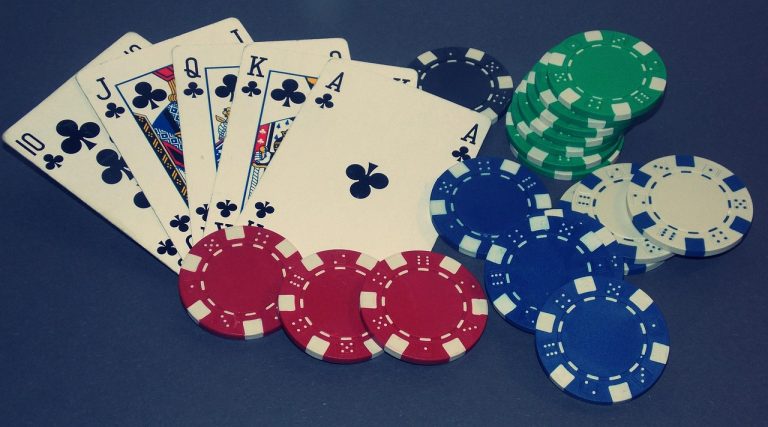
- Royal Flush: The undisputed king of poker hand rankings. It consists of the Ace, King, Queen, Jack, and Ten, all of the exact same suit. It is unbeatable.
- Straight Flush: Five sequential cards of the same suit. If two players hit this, the one with the higher top card wins.
- Four of a Kind (Quads): Four cards of identical rank. The fifth card is the kicker, used to break ties if necessary.
- Full House (Boat): A combination of three of a kind and a pair. In poker hand rankings, the rank of the three-of-a-kind determines the winner in a tie.
- Flush: Any five cards of the same suit, regardless of sequence.
- Straight: Five sequential cards of mixed suits. The Ace can act as both a high and low card.
- Three of a Kind (Trips/Set): Three cards of the same rank paired with two unrelated side cards.
- Two Pair: Two distinct pairs of cards plus one kicker.
- One Pair: A single pair of matching cards with three unrelated side cards.
- High Card: When no other combination is made, the hand is valued purely by its highest card.
Key Facts
| Hand Name | Description | Probability (5-card draw) | Example |
|---|---|---|---|
| Royal Flush | A-K-Q-J-10 of same suit | 1 in 649,740 (0.000154%) | A♠ K♠ Q♠ J♠ 10♠ |
| Straight Flush | 5 sequential cards, same suit | 1 in 72,193 (0.00139%) | 9♥ 8♥ 7♥ 6♥ 5♥ |
| Four of a Kind | 4 cards of identical rank | 1 in 4,165 (0.0240%) | 7♣ 7♠ 7♦ 7♥ K♠ |
| Full House | 3 of a kind + 1 pair | 1 in 694 (0.1441%) | J♦ J♠ J♥ 8♣ 8♥ |
| Flush | 5 cards of same suit | 1 in 509 (0.1965%) | K♦ Q♦ 9♦ 4♦ 2♦ |
| Straight | 5 sequential cards, mixed suits | 1 in 255 (0.3925%) | 7♠ 6♥ 5♦ 4♣ 3♠ |
| Three of a Kind | 3 cards of identical rank | 1 in 47 (2.1128%) | 5♣ 5♦ 5♠ K♥ 9♠ |
| Two Pair | Two separate pairs | 1 in 21 (4.7539%) | A♥ A♣ 8♦ 8♠ Q♣ |
| One Pair | Two cards of identical rank | 1 in 2.37 (42.2569%) | 10♥ 10♠ Q♦ 7♣ 4♠ |
| High Card | Highest single card wins | 1 in 1.99 (50.1177%) | A♦ K♠ 9♥ 7♣ 2♦ |
How to Play
Simply knowing the poker hand rankings is not enough; you must apply them dynamically during gameplay. How to play effectively relies on understanding absolute versus relative hand strength. The absolute strength of your hand is fixed by the official poker hand rankings. However, its relative strength changes dramatically based on the community cards, player actions, and the number of opponents.
Relative vs. Absolute Strength
For example, according to standard poker hand rankings, a Three of a Kind is a very strong hand. But if the community board shows four cards of the same suit, the relative strength of your Three of a Kind plummets, because the chances of an opponent holding a Flush are incredibly high. Advanced players use GTO solvers in 2026 to analyze poker hand rankings in real-time scenarios, calculating equity based on board textures.
Calculating Outs and Equity
When evaluating the board, your grasp of poker hand rankings allows you to read opponents and calculate your “outs.” An out is a card left in the deck that will improve your hand to a likely winner. By knowing the poker hand rankings inside out, you can quickly determine how many cards can give you a Straight or a Flush, allowing you to calculate your mathematical equity and make profitable betting decisions.
Bonus Features
Did you know that poker hand rankings can change depending on the specific game variant you are playing? While Texas Hold’em uses the traditional system, other formats introduce exciting “bonus features” and rule tweaks that completely alter the math.
Short Deck Variations
In Short Deck (6+ Hold’em), which has exploded in popularity in 2026, the poker hand rankings are fundamentally adjusted because all cards from 2 through 5 are removed from the deck. This alters the underlying probabilities. Because it is mathematically harder to hit a flush with fewer suited cards in the deck, the poker hand rankings flip: in Short Deck, a Flush actually beats a Full House. Always verify the specific poker hand rankings before sitting at a new table to avoid catastrophic miscalculations.
Wild Cards and Lowball Games
Other variations include wild card games, where Jokers or designated cards can substitute for anything, making Five of a Kind the top tier of the poker hand rankings. Additionally, Lowball games like Razz invert the system entirely, where the goal is to make the lowest possible hand according to the poker hand rankings, with A-2-3-4-5 being the absolute nuts.
RTP/Volatility
While RTP (Return to Player) and volatility are traditionally slot machine terms, applying them to poker hand rankings is highly effective for bankroll management in 2026. Unlike slots, where the RTP is hardcoded by the developer, your personal RTP in table games is determined by your skill, discipline, and mastery of poker hand rankings.
Maximizing Your Personal RTP
A deep understanding of poker hand rankings directly impacts your personal RTP (often referred to as ROI or win rate). Players who consistently make mathematically sound decisions based on accurate poker hand rankings will see a positive return over time. Conversely, if you ignore proper poker hand rankings and chase statistically improbable draws, your win rate will plummet.
Managing Gameplay Volatility
Volatility in this context refers to your bankroll variance or “swings.” By strictly adhering to the math behind poker hand rankings, you reduce your gameplay volatility. Playing only premium starting hands that have a high probability of dominating the poker hand rankings post-flop ensures smaller, more manageable swings. High volatility occurs when players overvalue weak hands, ignoring the strict hierarchy of poker hand rankings and relying on luck rather than statistical equity.
FAQ
Q: Do suits matter in standard poker hand rankings?
Q: What happens if two players have the same pair in poker hand rankings?
Q: Why does a Flush beat a Straight in traditional poker hand rankings?
Q: Are poker hand rankings the same in Omaha and Texas Hold’em?
What Readers Are Saying
Exactly what I needed. The live dealer experience here is top-notch. Streamed perfectly with no lag. Can't recommend this enough.
Great article! Finally a guide that explains side bets clearly. Very helpful for beginners. Top-tier content.
Solid write-up. Switched to this platform after reading the review. The dealers are very professional. Definitely 5 stars from me.
Thanks for the detailed breakdown. Baccarat odds are well explained. I've been using this strategy for two weeks now. Can't recommend this enough.